

Sikkim: A Comprehensive Travel Guide
About Sikkim Tourism
Nestled in the eastern Himalayas, Sikkim is a compact yet breathtaking travel destination known for its dramatic mountain landscapes, peaceful monasteries, and rich cultural heritage. From snow-capped peaks and alpine valleys to dense forests and winding rivers, the state offers remarkable natural diversity within a small area.
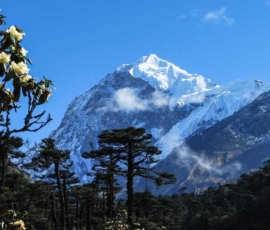
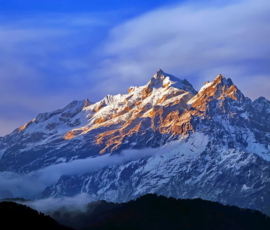
Towering above the region is Mount Kanchenjunga, the third-highest mountain in the world and a sacred symbol of Sikkim. Its majestic presence, visible from places like Gangtok, Pelling, and Ravangla on clear days, defines the visual identity of Sikkim tourism and leaves a lasting impression on visitors.
Culture and spirituality play a central role in the state’s tourism appeal. Ancient Buddhist monasteries, fluttering prayer flags, and traditional festivals such as Losar and Pang Lhabsol reflect Sikkim’s deep-rooted Himalayan and Tibetan influences. Monasteries like Rumtek and Pemayangtse offer serene spaces for reflection and cultural discovery.
Sikkim is also a leader in sustainable travel. As India’s first fully organic state, it promotes eco-friendly tourism through protected forests, village homestays, and responsible travel practices. Adventure seekers can enjoy trekking, river rafting, and high-altitude mountain passes, while others may prefer scenic drives and quiet Himalayan retreats.
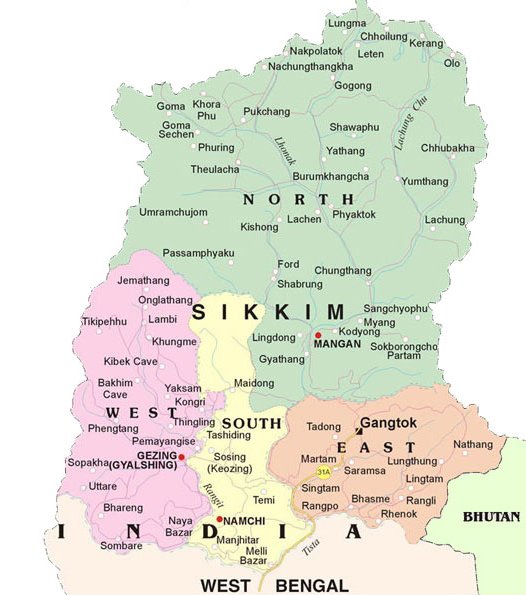
Present Districts of Sikkim (Since Dec 2021)
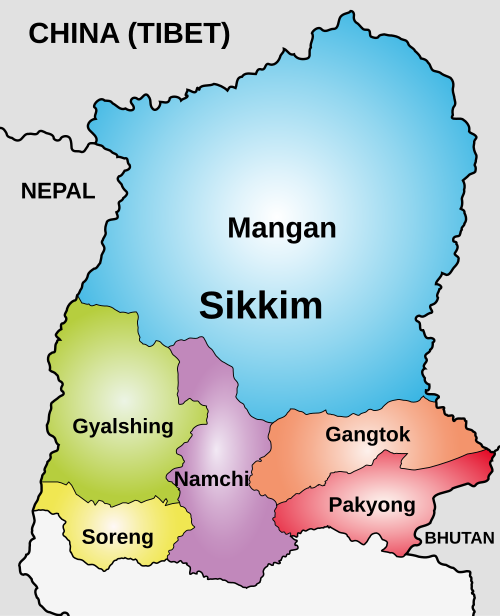
Furfur, CC BY-SA 4.0, via Wikimedia CommonsFast Facts about Sikkim
- Capital: Gangtok
- Best Time to Visit: March to June (Spring/Summer) and October to mid-December (Autumn/Winter).
- Currency: Indian Rupee (INR).
- Mandatory Update: As of January 2026, physical permits for foreign tourists have been scrapped. All Protected Area Permits (PAP) and Restricted Area Permits (RAP) must now be obtained via the official online permit portal.
Sikkim: Regional Sub-divisions (Past & Present)
Sikkim has evolved from a 17th-century Namgyal dynasty monarchy into India’s 22nd state (1975), restructuring from four administrative districts to six in December 2021. The state is divided into North, South, East, and West, with new districts—Pakyong and Soreng—carved out to improve administration.
Present Districts (Since Dec 2021)
- Gangtok: Formerly East Sikkim, containing the state capital.
- Mangan: Formerly North Sikkim, known for high altitude areas like Yumthang.
- Namchi: Formerly South Sikkim, known for cultural sites like Char Dham.
- Gyalshing: Formerly West Sikkim, hub for historical sites like Rabdentse.
- Pakyong: Newly formed district carved from East Sikkim.
- Soreng: Newly formed district carved from West Sikkim.
Former Administrative Structure (Before Dec 2021)
- East District: Capital Gangtok.
- West District: Capital Geyzing/Gyalshing.
- North District: Capital Mangan.
- South District: Capital Namchi.
Historical Regions & Context
- Yuksom: The first capital of Sikkim, established in the 17th century.
- Rabdentse: The second capital (near present-day Pelling) until the 19th century.
- Tumlong: Former capital before shifting to Gangtok.
- Tibetan Frontier Regions: Historically, areas near Nathu La and Chumbi Valley were crucial trade routes.
The state is geographically defined by the Teesta River, dividing it roughly into eastern and western regions, with the north being highly mountainous and the south being warmer and lower.
Sikkim Travel Guide
Top Places & Activities, How to Reach and Best Time to Visit
Best Time to Visit Sikkim: A Season-by-Season Travel Guide
Sikkim, nestled in the eastern Himalayas, is a year-round destination, but the best time to visit Sikkim largely depends on what kind of experience you’re looking for—clear mountain views, blooming valleys, snowfall, or cultural festivals. Thanks to its varied altitude and climate, each season in Sikkim offers something unique for travelers.
This guide breaks down the best seasons and months to visit Sikkim, helping you plan the perfect Himalayan getaway.
Spring in Sikkim (March to May): Best for Nature & Sightseeing 🌸
Why visit:
Spring is one of the most beautiful seasons in Sikkim. The snow begins to melt, temperatures remain comfortable, and the landscape comes alive with blooming rhododendrons and orchids.
Weather:
- Temperature: 10°C to 25°C
- Pleasant days, cool nights
Best experiences:
- Clear views of Mount Kanchenjunga
- Yumthang Valley in full bloom
- Ideal for sightseeing in Gangtok, Pelling, and Ravangla
- Great time for trekking and nature walks
Best for:
First-time visitors, photographers, families, and honeymooners.
Summer in Sikkim (June to August): Off-Season with Lush Landscapes 🌧️
Why visit:
Summer overlaps with the monsoon season, bringing heavy rainfall, misty mountains, and lush greenery. While landslides may occur in some regions, this season offers a quieter and more budget-friendly travel experience.
Weather:
- Temperature: 15°C to 22°C
- Frequent rainfall, high humidity
Pros:
- Fewer tourists
- Green valleys and waterfalls at their best
- Lower hotel prices
Cons:
- Limited visibility of mountains
- Roadblocks in remote areas
Best for:
Budget travelers, slow travelers, and those who enjoy misty landscapes.
Autumn in Sikkim (September to November): Best for Views & Festivals 🍁
Why visit:
Autumn is considered the best time to visit Sikkim for clear mountain views. Post-monsoon skies are crystal clear, offering stunning panoramas of the Himalayas.
Weather:
- Temperature: 8°C to 20°C
- Dry, cool, and stable
Best experiences:
- Spectacular Kanchenjunga views
- Trekking and outdoor activities
- Major festivals like Pang Lhabsol and Tihar
- Excellent road conditions
Best for:
Photographers, trekkers, cultural travelers, and couples.
Winter in Sikkim (December to February): Best for Snow Lovers ❄️
Why visit:
Winter transforms Sikkim into a snowy wonderland, especially in higher altitudes. While some remote areas may be inaccessible, winter has its own charm.
Weather:
- Temperature: 0°C to 10°C (lower in higher regions)
- Snowfall in North Sikkim and Nathula Pass
Best experiences:
- Snow at Nathula Pass, Lachung, and Yumthang
- Fewer crowds
- Cozy mountain stays
- Winter photography
Limitations:
- Road closures due to snow
- Extreme cold in high-altitude areas
Best for:
Snow lovers, adventure seekers, and offbeat travelers.
Final Thoughts
The best time to visit Sikkim depends on your travel goals, but spring and autumn remain the most recommended seasons for an all-round experience. Whether you’re drawn by snow-capped peaks, blooming valleys, spiritual monasteries, or quiet Himalayan escapes, Sikkim offers unforgettable experiences in every season.
Plan your trip wisely, and Sikkim will reward you with breathtaking landscapes, rich culture, and timeless mountain serenity.Lorem ipsum dolor sit amet, consectetur adipiscing elit. Ut elit tellus, luctus nec ullamcorper mattis, pulvinar dapibus leo.
Best Time to Visit Sikkim Overall: Spring & Autumn
For most travelers, the ideal time to visit Sikkim is:
- Spring (March to May) and
- Autumn (September to November)
During these months, the weather is pleasant, skies are clearer, and road conditions are generally good—perfect for sightseeing, photography, trekking, and cultural exploration.
Month-Wise Quick Guide
- March–May: Best for flowers, sightseeing, pleasant weather
- June–August: Lush greenery, fewer crowds, but heavy rain
- September–November: Best overall time; clear views & festivals
- December–February: Snowfall and winter charm (limited access)
Best Time to Visit Sikkim Based on Travel Interests
- For sightseeing & photography: March–May, September–November
- For trekking: April–June, September–October
- For snowfall: December–February
- For budget travel: July–August
- For festivals & culture: October–November