Perched gracefully on the slopes of Jalapahar Hill, the Japanese Temple in Darjeeling stands as one of the most peaceful, spiritually enriching and culturally significant attractions in the hill town. Known locally as the Nipponzan Myohoji Buddhist Temple, this serene white structure is part of the famous Japanese Temple and Peace Pagoda complex, a destination that welcomes travellers with open arms and a calm ambience far removed from the bustle of Darjeeling town.
Whether you are a spiritual seeker, a nature lover, or a traveller exploring Darjeeling’s heritage, the Japanese Temple promises a refreshing pause — a space to reflect, breathe and reconnect with tranquillity.
✨ History & Significance of the Japanese Temple
The Japanese Temple was built in 1972 by monks of the Nipponzan Myohoji Buddhist Order, an organisation founded by the revered Japanese monk Nichidatsu Fujii. After witnessing the devastation of Hiroshima and Nagasaki during World War II, Fujii dedicated his life to promoting non-violence and world peace. As part of this mission, he encouraged the construction of Peace Pagodas and temples across the globe.
The temple in Darjeeling is a symbol of this global peace movement. Together with the adjacent Peace Pagoda, it embodies the philosophy of harmony, compassion, and unity — values deeply rooted in Buddhist teachings.
🏯 Architecture: Simple, Elegant and Deeply Symbolic
Unlike the elaborate monasteries of Tibetan tradition, the Japanese Temple features minimalist and elegant Japanese architectural elements. Its two-storey, snow-white structure exudes quiet beauty, with clean lines and a graceful wooden interior. The simplicity of the temple represents purity of mind and spirit — the core of Buddhist practice.
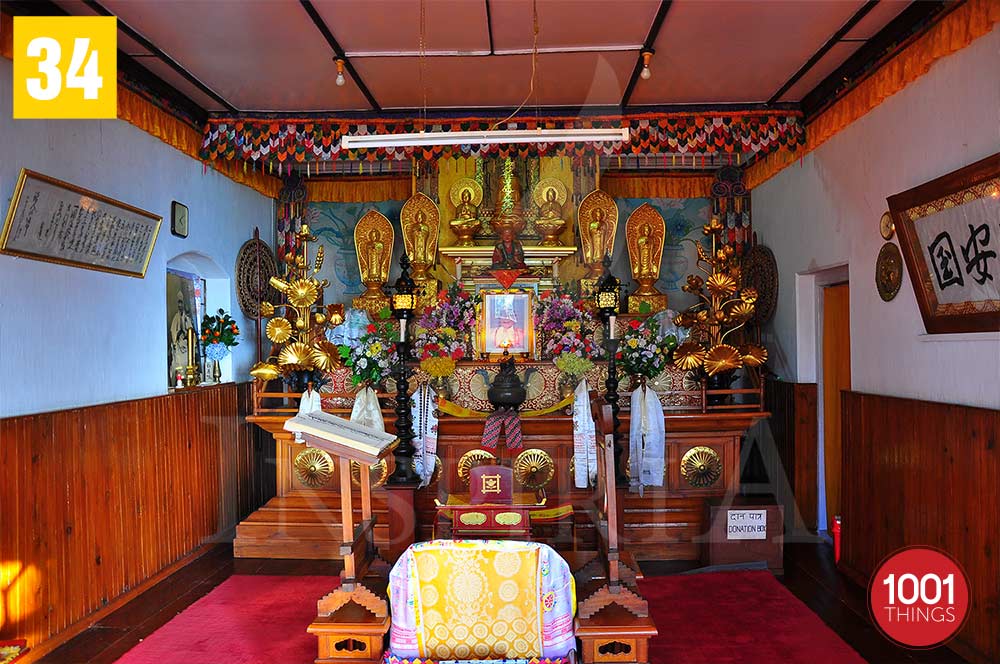
Inside the prayer hall, you will find:
- A golden statue of Lord Buddha
- Traditional Japanese drums
- Scrolls inscribed with Buddhist chants
- Peaceful seating arrangements for prayer sessions
The environment instantly calms the senses. The fragrance of incense, soft light filtering through wooden slats, and the rhythmic chants create a meditative aura that feels almost timeless.
🕉️ The Prayer Experience: A Must-Do for Every Visitor
One of the most memorable aspects of visiting the Japanese Temple is the daily prayer chanting, held morning and evening. Monks sit in a semicircle rhythmically beating the large drum known as the Ho-ko, while chanting the powerful mantra:
“Nam Myoho Renge Kyo.”
Visitors are welcome — even encouraged — to join the session. You can sit quietly, follow the rhythm, or gently beat a small hand drum offered by the monks. Many travellers describe this experience as deeply spiritual, grounding and emotionally soothing.
If you want to experience Darjeeling beyond sightseeing, this ritual is the perfect way to immerse yourself in its quieter, soulful side.
🕊️ Peace Pagoda: A Companion to the Temple
Just a short walk uphill from the temple stands the magnificent Peace Pagoda, one of the main highlights of the complex. Built between 1972 and 1992, this gleaming white structure features:
- Four golden Buddha statues
- Beautiful sandstone carvings depicting scenes from Buddha’s life
- A circular walkway for parikrama
- Stunning panoramic views of Darjeeling and the Himalayan peaks
Together, the temple and pagoda form one of the most serene corners of Darjeeling — a place where spiritual atmosphere meets Himalayan beauty.
🌄 What Makes the Japanese Temple Special?
1. A retreat from the city bustle
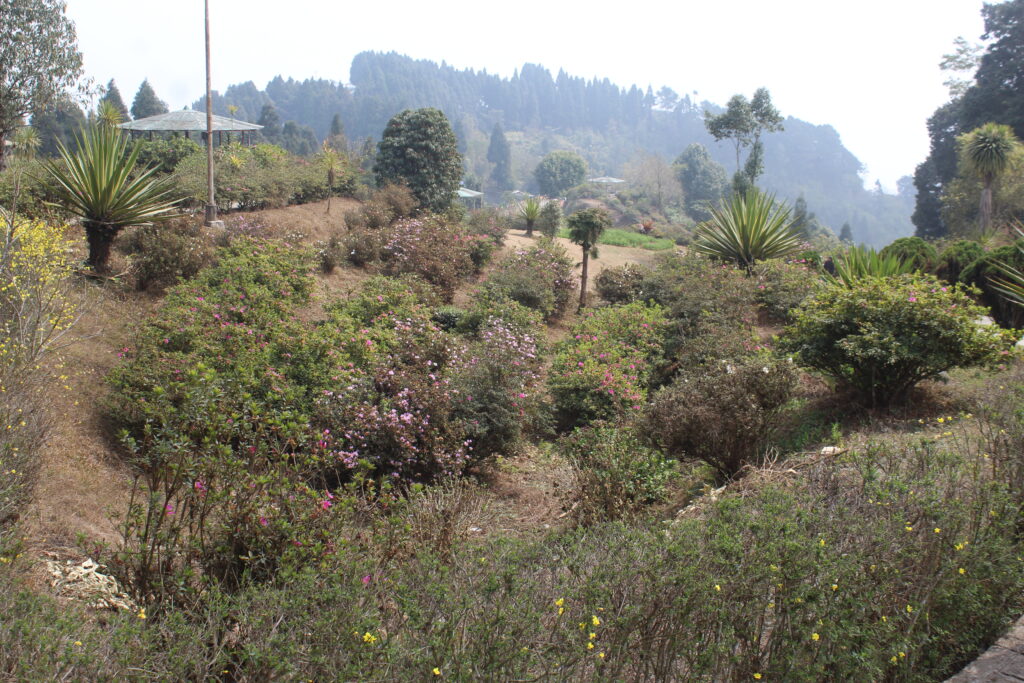
While Darjeeling’s Mall Road and markets buzz with activity, the Japanese Temple offers a peaceful break. The quiet pathways, pine forests and gentle mountain breeze make the entire area feel like a sanctuary.
2. Perfect for meditation and reflection
The calm environment encourages quiet contemplation. Whether you sit during the chants or meditate on your own, the place supports inner stillness.
3. Spectacular Himalayan views
On a clear morning, you can spot snow-capped peaks of the Kanchenjunga range — a breathtaking sight that adds even more charm to this spiritual haven.
4. Universal welcome
The temple is open to everyone, regardless of faith, nationality or background. The message of peace and unity is truly universal.
🧭 How to Reach the Japanese Temple
The temple is located about 10 minutes’ drive from Darjeeling town. Taxis are easily available from Mall Road or Chowrasta.
After parking, a short walk through a narrow path leads you to the temple entrance. The walk is refreshing, surrounded by greenery and quiet slopes.
📅 Best Time to Visit
- Early morning (for the morning prayers and fresh mountain air)
- Late afternoon (for soft golden light and peaceful ambience)
- October to April (clear skies and good visibility)
Avoid very foggy or rainy days if you want to enjoy the Himalayan views.
🎒 Travel Tips for Visitors
- Maintain silence inside the prayer hall.
- Remove shoes before entering.
- Photography inside the temple may be restricted — follow instructions.
- If joining the prayer, sit where the monks guide you.
- Dress modestly and respectfully.
📌 Why You Should Add the Japanese Temple to Your Darjeeling Itinerary
The Japanese Temple is not just a tourist attraction — it is a soulful experience. It offers:
- A glimpse into Japanese Buddhist culture
- A peaceful atmosphere to unwind
- A chance to participate in authentic chanting rituals
- Beautiful views of the hills and mountains
- A deeper understanding of Darjeeling’s multicultural heritage
For travellers seeking a meaningful connection with the place, this temple provides exactly that — a quiet refuge where peace is not just preached, but felt.